Lithium Project - Mali
Project Overview: Mali Lithium Project
Stratmin is actively developing the Faraba and Gouna lithium permit areas (combined area of 175 Sq Kms) in the Sikasso region of southern Mali, approximately 200km South-East of the capital city, Bamako. Both block permits are well connected by the National Highways RN7 and A5.
The project is situated in a world-class lithium district, neighboring prominent deposits like the Goulamina Lithium Project (one of the world's largest spodumene projects), confirming the highly prospective nature of the local geology.
Active Operations & Development Progress
Stratmin's operations have successfully transitioned into high-intensity physical development. The following sections highlight our ongoing pit excavation, logistics, and processing activities on-site:
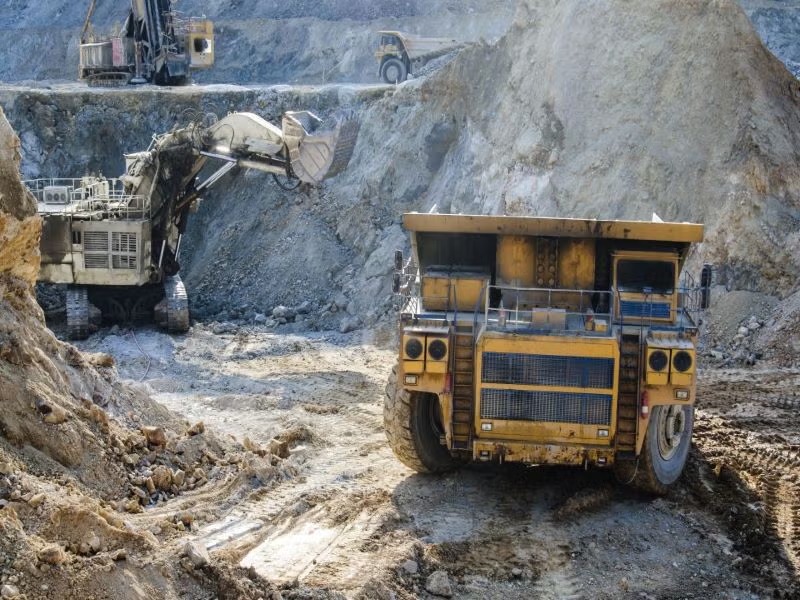
Deep Open-Pit Excavation & Haulage
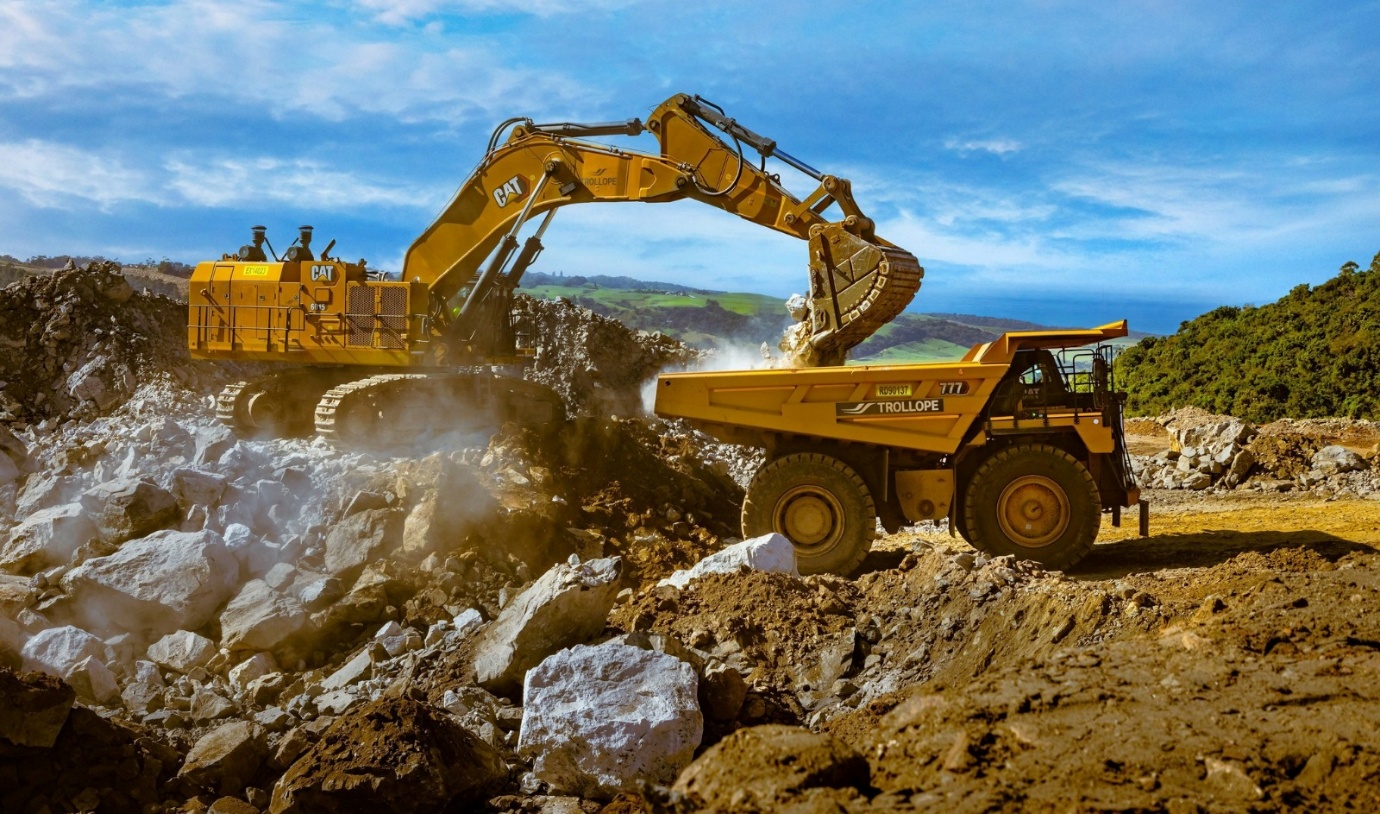
Open-Pit Mining & Bulk Extraction: Utilizing heavy-duty hydraulic excavators alongside high-capacity off-highway dump trucks, our open-pit operations efficiently remove overburden and extract hard-rock lithium ore from deep bench faces within the pit.
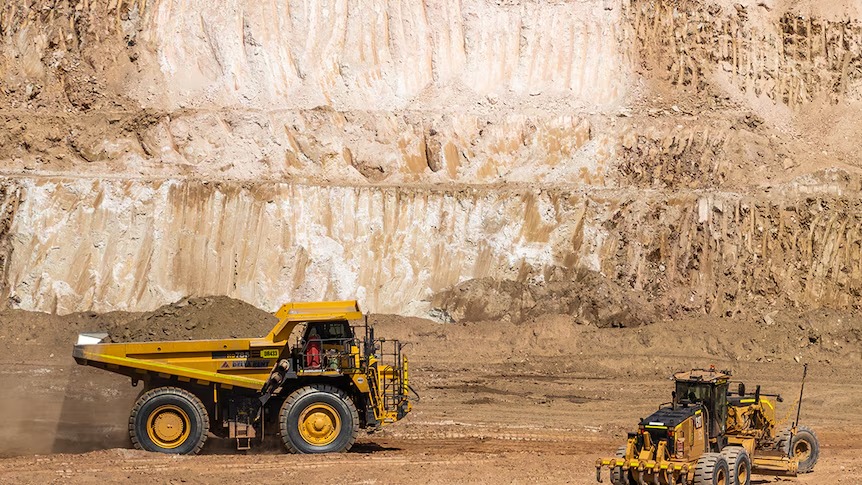
Bench Haulage & Pit Maintenance
Haul Road Maintenance & Ore Logistics: Continuous active haulage along wide bench circuits ensures a steady transport flow from the pit floor to the primary crushers. Dedicated motor graders work alongside haul fleets to maintain smooth road conditions, optimizing transit efficiency and equipment safety.
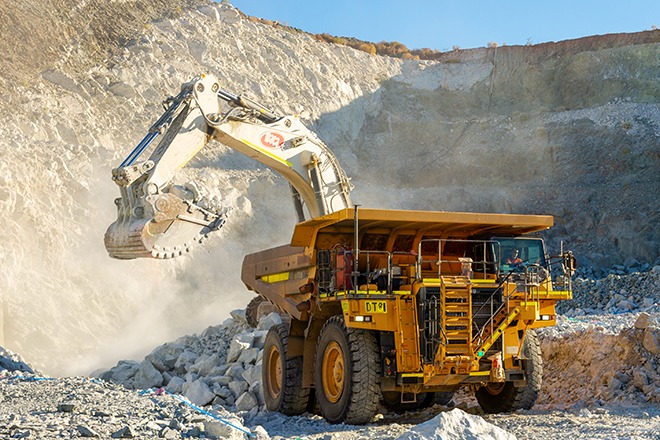
Bench Face Loading Operations
High-Precision Ore Loading: Heavy excavators systematically load blasted hard-rock pegmatite ore directly into rigid dump trucks at the bench face. Selective mining practices are applied during loading to separate high-grade ore from waste material.
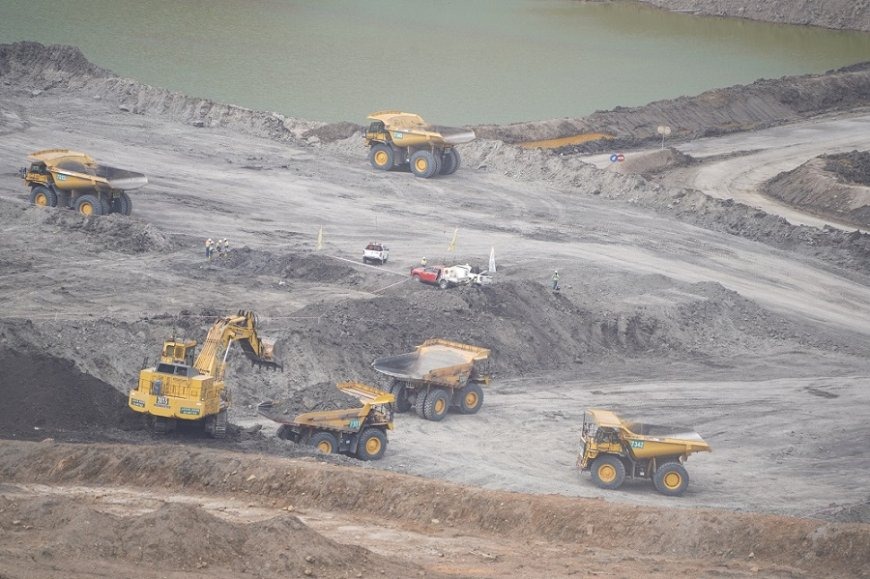
Multi-Fleet Pit Operations & Bench Development
Synchronized Open-Pit Fleet Operations: Simultaneous loading, hauling, and bench-clearing operations operate across multiple levels within the mine pit. Dedicated survey and safety teams manage active haul routes to maintain high operational throughput and safety compliance.
Primary Extraction & Hard-Rock Handling
Primary Ore Extraction & Loading: High-capacity excavators break out bulk lithium-bearing pegmatite rock, filling heavy haul trucks for transport to processing stockpiles. Fleet monitoring ensures seamless cycle times between extraction zones and processing facilities.
Crushing, Screening & Beneficiation Plant
Integrated Crushing & Stockpiling Infrastructure: Our on-site primary and secondary crushing facility processes run-of-mine (ROM) lithium ore to required size fractions. Conveyor systems sort and deposit crushed ore into distinct stockpiles for efficient blend control prior to downstream processing, ensuring consistent head-grade feed.
Exploration History & Geological Context
Russians initially carried out exploration in the Bougouni sector in the 1960s, noting the presence of lithium-bearing spodumene. Stratmin's exploration has built on this historical data. The local pegmatite veins occur as parallel and sub-parallel systems ranging from a few centimeters up to 7 meters in width, containing quartz, microcline feldspar, albite, muscovite mica, smoky quartz, spodumene, and iron oxides.
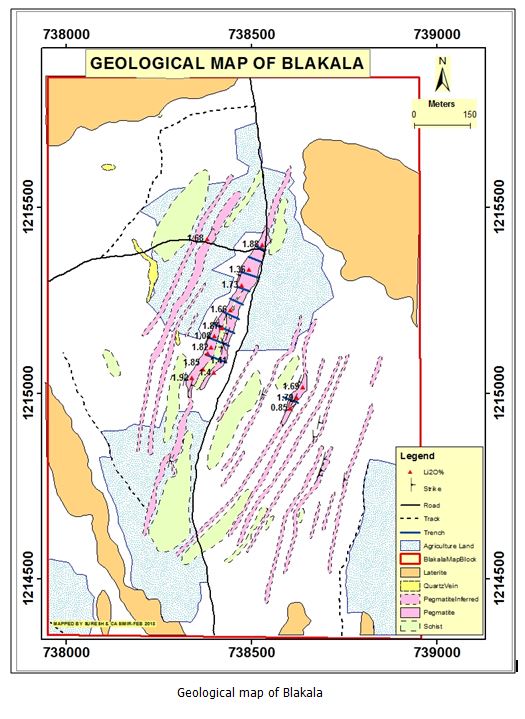
Trenching has successfully established the width of the main mineralized bodies. A total of eight (8) trenches were completed perpendicular to the strike of the pegmatites, with a cumulative length of 106.40 meters, confirming continuity across the Blakala block.
Blakala Spodumene Pits Progress
The Blakala block features pegmatite with spodumene, schistose rocks, quartz veins, and laterite as the main lithological units. Schist is the oldest lithology, predominantly quartz-mica schist indicating green-schist facies of metamorphism.
Pitting has confirmed that the pegmatites contain coarse-grained spodumene crystals, which are being logged and prepared for mineralogical assays. Pits are placed on a 50m x 50m grid to map soil-covered sectors and outline the shape of the pegmatite intrusion.
Ongoing Sample Assays & High Lithium Grades
Analytical data of grab and trench samples point to high-grade lithium potential across the Faraba and Gouna permits:
- Grab samples collected from surface pegmatite exposures were analyzed at Shiva Laboratories, India.
- The average grade across all collected and assayed samples is 1.63% Li2O.
- Assays show spodumene-rich zones yielding between 1.08% and 1.92% Li2O.
Project Development Timeline (2024 - 2027)
To bring the Mali Lithium Project to exploitation, Stratmin is executing a phased work program:
- Phase 1: Surface Exploration & Trenching (Q1 2024 - Q3 2024) [Completed] - Pitting (31 pits), trenching (8 trenches), and surface sampling confirming high-grade spodumene.
- Phase 2: Geophysics & Target Definition (Q4 2024 - Q2 2025) [Completed] - Ground magnetics and IP surveys mapping subsurface extensions of pegmatites.
- Phase 3: RC/DD Drilling & Resource Definition (Q3 2025 - Q2 2026) [In Progress] - Infill drilling campaign (5,000m RC and 2,000m Diamond Drilling) to establish a JORC-compliant resource model.
- Phase 4: Metallurgical Testing & Process Flowsheet (Q3 2026 - Q4 2026) [In Progress] - Bulk sampling and beneficiation test work to optimize lithium recovery.
- Phase 5: Pre-Feasibility Study & Permitting (Q1 2027 - Q2 2027) [Planned] - Feasibility reports and application for mining concessions.