Graphite Project - Madagascar
About Madagascar
Madagascar is the fourth largest island in the world, situated off the southeast coast of Africa, with a population of 26.2 million. Its capital is Antananarivo, which is the largest city in Madagascar. Traditionally, the Malagasy economy has been based on agriculture (paddy rice, coffee, vanilla, cloves). Madagascar is known for its mineral wealth, with noted mining potential in industrial and metallic minerals, energy, precious and semi-precious stones, and ornamental stones.
Ambohijanaka Prospect
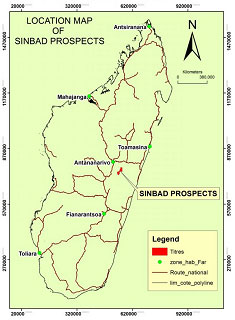
The Sinbad graphite project in Madagascar is located near the Ambohijanaka village of Andramasina Region. The project is located 100 km South East of the capital city of Antananarivo.
Active Pit Operations & Ore Extraction
Stratmin is operating large-scale, systematic bulk extraction and high-capacity logistics circuits on-site. Below are key details of our active graphite operations:
Multi-Bench Open-Pit Extraction
Large-Scale Open-Pit Mining & Infrastructure: Operating across systematic, multi-tiered bench levels, our open-pit operations facilitate continuous, high-volume extraction of high-grade graphite ore. Integrated haulage roads and rail infrastructure connect active benches directly to processing and transfer points, ensuring streamlined pit logistics.
High-Capacity Rope Shovel Loading
High-Volume Ore Loading & Transport: Heavy-duty electric rope shovels work continuously at the primary pit face to load blasted graphite ore into high-tonnage rigid dump trucks. This heavy fleet setup maintains seamless extraction rates necessary to feed our downstream beneficiation circuits.
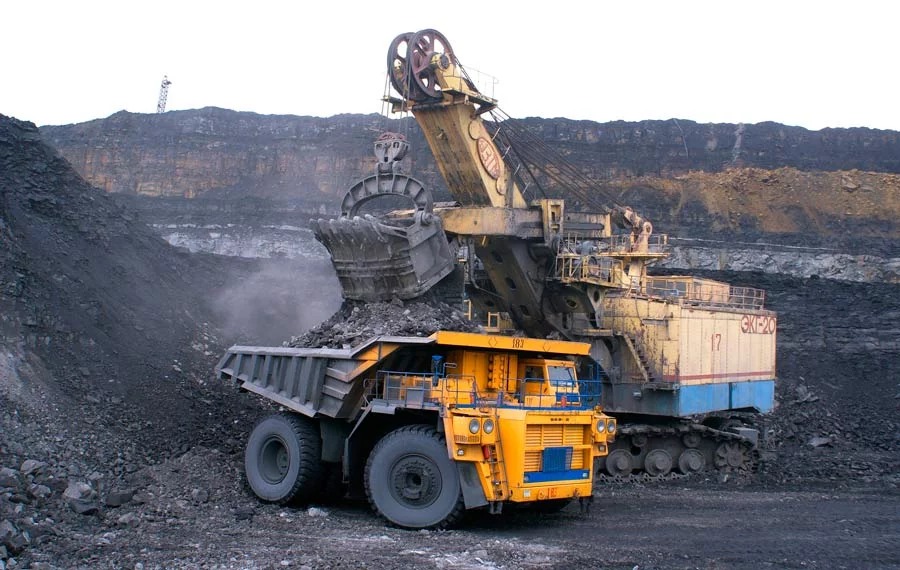
Deep-Pit Bulk Ore Handling
Primary Excavation & Pit Fleet Integration: Utilizing specialized heavy shovels and heavy-duty haul fleets, ore extraction continues along the lower bench faces. Efficient cycle management ensures constant cycle times between the pit floor, stockpiles, and processing feed points.
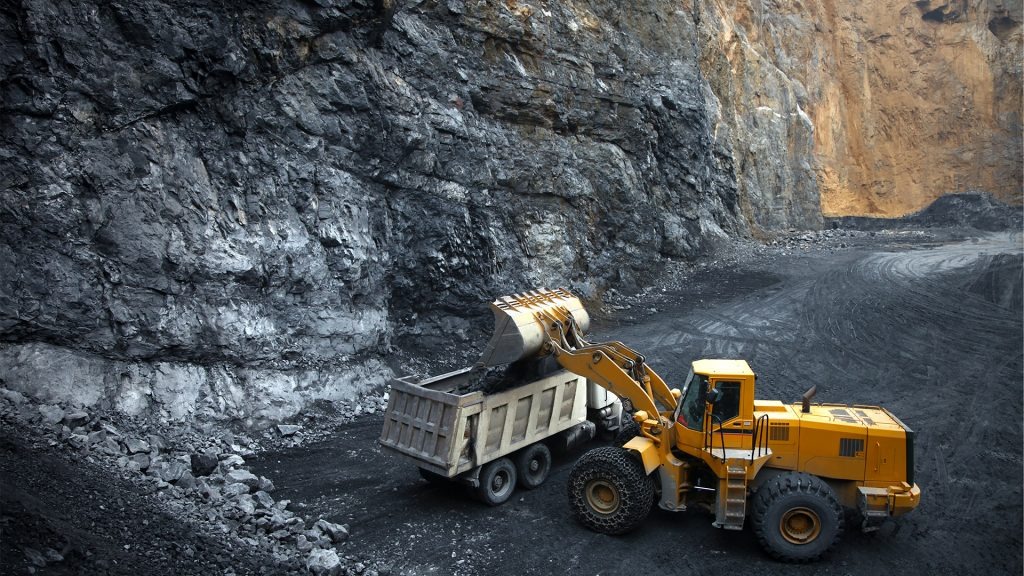
Direct Bench Loading & Wheel Loader Operations
Selective Loading & Face Clean-Up: Heavy wheel loaders work along high-wall bench faces to perform precise loading and floor maintenance. Operating in tight pit contours, these mobile loaders complement our primary shovels by handling run-of-mine (ROM) graphite ore directly into haul trucks.
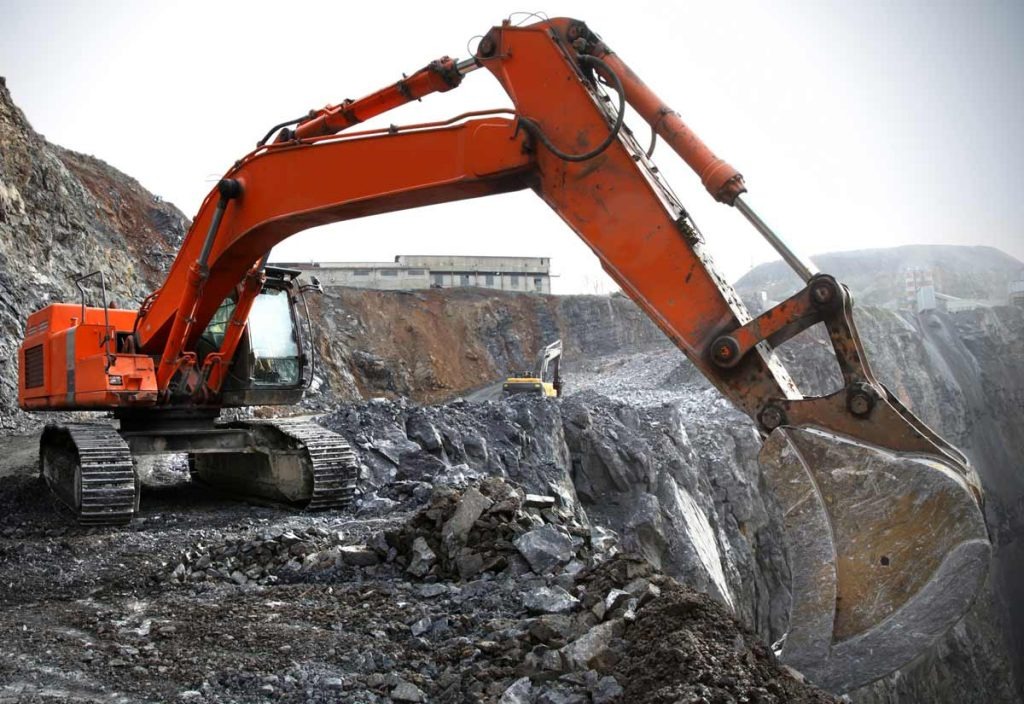
Bench Development & High-Wall Scaling
Pit Wall Scaling & Site Preparation: Heavy hydraulic excavators conduct bench scaling, overburden clearing, and edge stabilization along active high-walls. Maintaining strict pit geometry and wall stability ensures safe access for primary extraction equipment on lower operating tiers.
Stockpile Management & Upper-Tier Loading
Continuous Ore Transfer & Stockpile Loading: High-reach hydraulic excavators operating from elevated benches load run-of-mine graphite ore onto heavy dump trucks for transfer to secondary crushers and ROM stockpiles, maintaining steady feed rates during peak production cycles.
Geology
Sinbad resources is a part of the Ambatolampy group of Proterozoic age and Vondrozo Group of Archaean age. Eastern part of the tenement is covered by Paragneiss, Metasediments, Migmatites, Quartzite, etc. of Archaean age; whereas the western part of the tenement is composed of Paragneiss, Graphite, Quartzite, Biotite schist, etc. of Proterozoic age. These formations have been intruded by younger granite Neoproterozoic age belonging to the Manjakandriana suite.
Geological Mapping
The Sinbad permit is having 3 Blocks with 10 graphitic bands. Block 1- having 7 graphitic bands, Block 2 - having 2 graphitic bands and Block 3 - having one graphitic band.
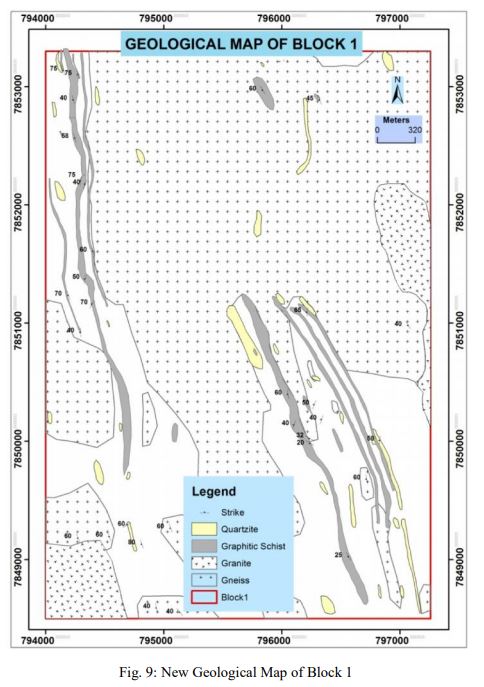
In July - August 2017, Geological Mapping was carried out by experienced geologists over the traverse lines spaced at an interval of 100m and has recorded Lithological, Structural and Mineralisation data. Block 1 is having prominent graphitic schist bands with considerable strike 5 km long along North South direction and 3.3 km wide along East west Direction.
Graphite Mineralization is found in different forms like disseminated flakes, amorphous and lamellae type. Disseminated graphite flakes are commonly found within schist and gneisses spread over several meters, whereas amorphous type graphite is found along some veins with a thickness varying from few centimeters to tens of centimeters, lamellae type graphite mineralization is found associated with pegmatite intrusions.
Resources & Future Plan
Detailed geological mapping has revealed seven different parallel graphitic schist bands. Based on the geological mapping, preliminary indicative graphite resources have been estimated for the seven graphitic schist bands by assuming the depth persistence for over a depth of 50 to 75 meters.
Priority and focus will be on Block 1 as weathered saprolite bed rock is prominent. Auger drilling is planned to understand depth persistence up to 10 to 15 meters, alongside resistivity and Self Potential (SP) geophysical surveying to delineate graphitic conductive zones.
Historical Project Gallery
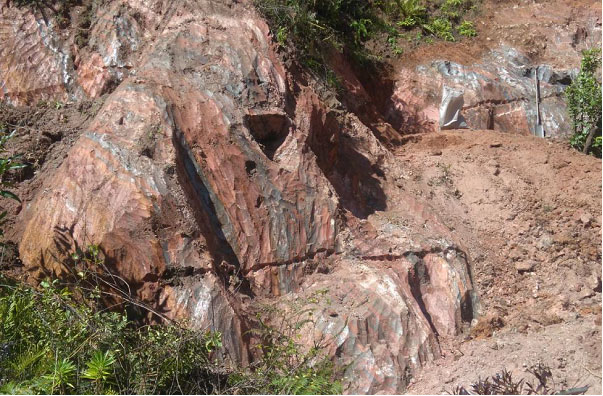
Weathered Gneiss & Disseminated Flakes
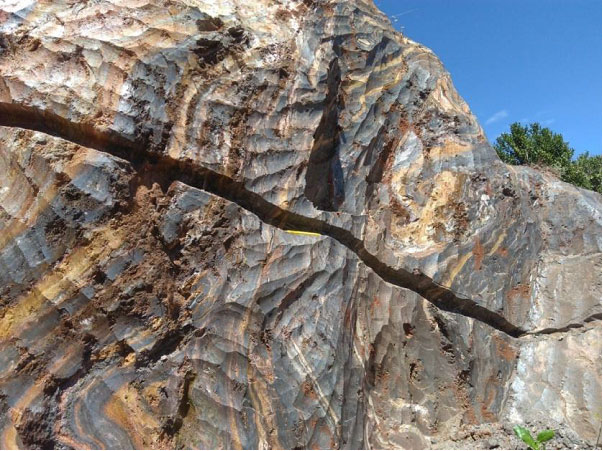
Composite Sampling over Old Mine Site
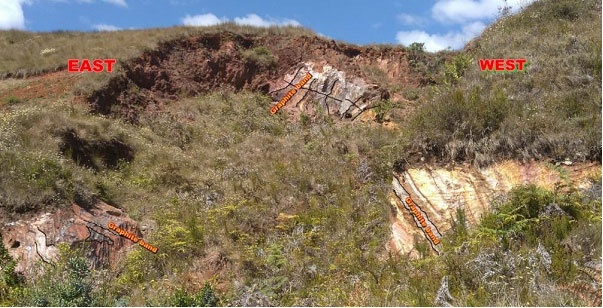
Multiple Graphitic Schist Bands & Folding
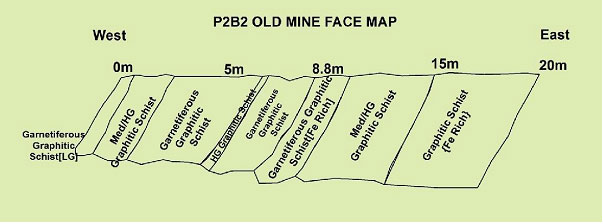
Face Mapping of Old Mine Excavation